
Short Inca Trail to Machu Picchu: The Complete Hiking Guide for Travelers Short on Time
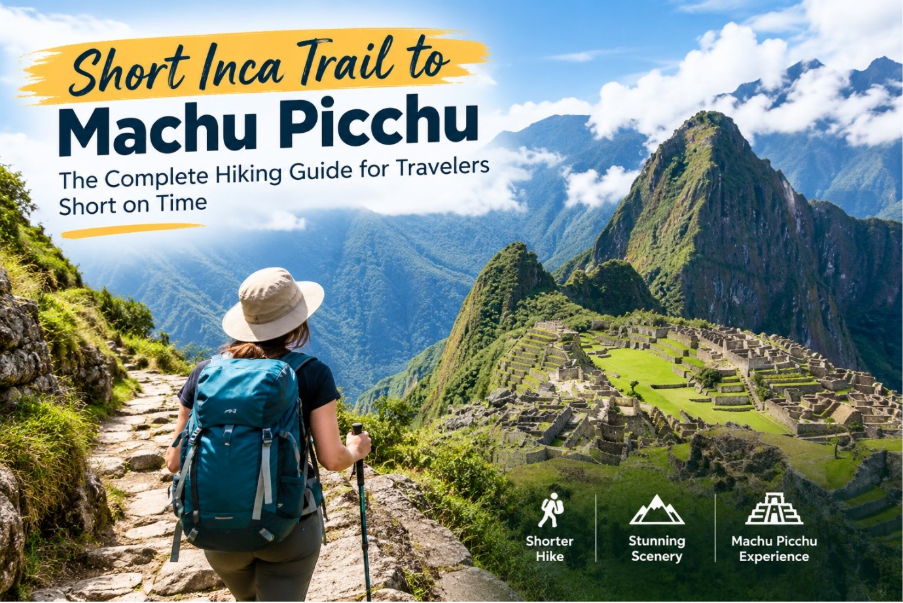
The first time you see Machu Picchu from above, it doesn’t feel real. The mist usually gets there before you do, curling around the stone terraces like it’s trying to keep the secret a little longer. Then the sun breaks through, and the whole citadel just sits there in the mountains, exactly as it has for six centuries, waiting for you to catch your breath.
Most people assume that view only belongs to hikers who’ve spent four days and three nights crossing high Andean passes on the classic Inca Trail. It doesn’t. If you’re tight on vacation days, recovering from a longer trip through Peru, or simply not up for multi-day camping at altitude, the Short Inca Trail to Machu Picchu gets you to that same moment in roughly a day — and it’s one of the most underrated hiking tours to Machu Picchu available.
This guide walks through everything you actually need to know before booking: what the route looks like, how hard it really is, what to pack, how it compares to the full four-day trek, and the small details that make or break the experience.
What Exactly Is the Short Inca Trail?
The Short Inca Trail (sometimes called the 2-Day Inca Trail or One-Day Inca Trail, depending on the operator) is a condensed version of the classic route. Instead of starting at kilometer 82, you begin further along the trail, around kilometer 104, after a train ride from Ollantaytambo or Cusco.
From there, you cross the Urubamba River, climb toward the Inca site of Wiñay Wayna, and eventually reach the Sun Gate — the same entrance point used by trekkers who’ve just spent four days in the mountains. You then descend into Machu Picchu itself.
Depending on the operator, this is done as:
- A single, long day hike (train in the morning, hike in the afternoon, Machu Picchu the same day)
- A two-day version with an overnight in Aguas Calientes before exploring Machu Picchu fresh the next morning
The two-day version tends to be the better choice. You’re not racing the clock to see the ruins before closing, and you get a proper night’s sleep before tackling the site in daylight.
How It Compares to the Classic Four-Day Trek
This is usually the first question people ask, and it’s a fair one. The classic Inca Trail tours cover around 26 miles over four days, crossing Dead Woman’s Pass at nearly 13,800 feet. It’s a serious trek — beautiful, but demanding, and it requires booking permits months in advance since daily numbers are capped.
The short version covers about 7 miles in one afternoon. You skip the high passes, the multi-day camping, and most of the altitude gain. What you keep is the dramatic approach through cloud forest, the ruins along the way, and that walk through the Sun Gate that the longer trek is famous for.
Here’s the honest trade-off: you miss Dead Woman’s Pass, Runkurakay, and a couple of the lesser-known archaeological sites only accessible on the full route. What you gain is flexibility — fewer logistics, less gear, no tent, and a trip that fits into a long weekend rather than a week.
If someone asks me which one to pick, I usually turn it around and ask how much time they have and how they feel about three nights in a sleeping bag at altitude. That answer makes the decision for them pretty quickly.
What the Hike Actually Feels Like
The trail starts with a short, steep climb almost immediately after you cross the river — nothing dangerous, but enough to make you notice if you haven’t acclimatized. This is where altitude matters more than fitness. Plenty of marathon runners get winded here because their bodies haven’t adjusted to the thinner air, while slower, steadier hikers who spent a few days in Cusco beforehand do just fine.
After that first climb, the path levels out into a mix of stone steps and dirt trail, hugging the mountainside with the Urubamba River far below. You’ll pass through patches of cloud forest where orchids grow wild along the rocks, and if the clouds lift even for a minute, you get glimpses of snow-capped peaks that make you stop walking entirely.
Wiñay Wayna, about two-thirds of the way along, is worth slowing down for. It’s one of the most impressive Inca sites outside Machu Picchu itself — agricultural terraces cascading down a steep slope, with a ceremonial area and fountains still intact. Most people underestimate how much time they’ll want here. Give yourself at least twenty minutes.
The final stretch toward the Sun Gate includes a set of steep stone stairs that locals have nicknamed, somewhat unkindly, the “gringo killer.” It’s short — maybe ten minutes of hard climbing — but it arrives right when your legs are tired, so pace yourself rather than pushing through fast.
Then you reach Inti Punku, the Sun Gate, and Machu Picchu appears below you for the first time.
Difficulty Level and Who This Trek Suits
This is a moderate hike, not an easy stroll, but it’s accessible to most people with reasonable fitness. You don’t need trekking experience. You do need:
- A baseline level of cardiovascular fitness (regular walking or light exercise is enough)
- At least two full days of acclimatization in Cusco or the Sacred Valley beforehand
- Comfortable, broken-in hiking shoes
- Realistic expectations about altitude — it affects fit people too
Families with older kids, travelers in their sixties and seventies with decent mobility, and people who simply don’t have a week to spare all do this trek regularly. It’s genuinely one of the more approachable Machu Picchu trekking routes for people who want the Inca Trail experience without the multi-day commitment.
Where it’s less ideal: if you have significant joint issues, uncontrolled heart or respiratory conditions, or you’re traveling with very young children, the Short Inca Trail still involves steep stairs, uneven footing, and altitude exposure. Talk to a doctor before booking if you have any underlying health concerns.
When to Go
The dry season, roughly May through September, offers the most reliable weather — clear mornings, cooler temperatures, and better visibility at the Sun Gate. It’s also the busiest period, so trails and the citadel itself will have more foot traffic.
The shoulder months (April, October, early November) are a solid middle ground: fewer crowds, decent weather odds, and slightly lower prices on hiking tours to Machu Picchu.
January through March is the rainy season, and it’s worth knowing that the classic four-day Inca Trail actually closes entirely in February for trail maintenance. The Short Inca Trail typically stays open, though expect muddy sections and a real chance of afternoon rain. If you’re set on hiking during these months, pack accordingly and hold your expectations loosely — Andean weather changes fast, and a cloudy morning can turn into brilliant sun by noon, or the reverse.
What to Pack
You’re not camping, so this list is shorter than what you’d need for the classic trek, but a few things make a real difference:
- Broken-in hiking shoes or boots with good grip — not brand new ones
- Layers: a base layer, a light fleece or sweater, and a waterproof shell
- Sun protection — hat, sunscreen, sunglasses. The sun at this altitude burns fast even on cool days
- A reusable water bottle (2 liters minimum)
- Coca leaves or candy, which locals swear by for altitude discomfort
- A small daypack, not a full trekking pack
- Your passport and original Machu Picchu ticket — both are checked at multiple points
Leave the heavy camera gear unless you’re genuinely into photography. A phone camera handles the Sun Gate view just fine, and you’ll enjoy the walk more with less weight on your back.
Booking Logistics and Permits
Like the classic trail, the Short Inca Trail to machu picchu requires a permit, and permits are limited daily. Unlike the four-day trek, availability tends to open up a bit closer to your travel dates, but booking two to three months ahead is still the safer move, especially during peak season (June through August).
You’ll need to book through a licensed tour operator — independent hiking isn’t permitted on this route, same as the full Inca Trail. A typical package includes the train ticket, entrance permit, a guide, and often lunch. Guides are genuinely useful here, not just a formality; they’ll point out details in the Inca stonework and ecology you’d otherwise walk right past.
Why This Trek Is Worth Considering
There’s a particular kind of traveler this trip is built for: someone who wants to earn their first view of Machu Picchu rather than just stepping off a bus and seeing it from a viewpoint, but who doesn’t have the time, gear, or desire for a multi-day expedition. The Short Inca Trail splits the difference in a way that feels honest rather than like a shortcut.
Among the various Machu Picchu hiking tour options, this one consistently surprises people. They expect a watered-down experience and instead get a genuinely memorable afternoon — cloud forest, ancient terraces, a tough final climb, and then that first glimpse through the Sun Gate that no bus ride can replicate.
Frequently Asked Questions
How long is the Short Inca Trail to Machu Picchu?
The Short Inca Trail covers about 7 miles (11 km), typically completed in 6 to 7 hours of hiking. Most itineraries treat it as a single afternoon trek, though some operators spread it across a more relaxed half-day pace.
Is the Short Inca Trail difficult?
It’s a moderate hike with some steep, strenuous sections, particularly near the end. Altitude is a bigger factor than distance, so prior acclimatization in Cusco matters more than raw fitness level.
Do I need a permit for the Short Inca Trail?
Yes. Permits are required and limited daily, just as with the classic four-day trek, though they tend to be easier to secure since fewer people book this route.
Can beginners do the Short Inca Trail?
Yes, with reasonable fitness and proper acclimatization. It’s one of the more accessible hiking tours to Machu Picchu, suitable for first-time trekkers, families, and older travelers without major mobility limitations.
What’s the difference between the Short Inca Trail and the Classic Inca Trail?
The Short Inca Trail is a one-day (or two-day) version starting at kilometer 104, covering roughly 7 miles and skipping the highest mountain passes. The classic trek covers 26 miles over four days and includes Dead Woman’s Pass at nearly 13,800 feet.
When is the best time to hike the Short Inca Trail?
May through September offers the most reliable dry weather. April, October, and early November are good shoulder-season alternatives with fewer crowds. February is possible on this route even though the classic trail closes for maintenance.
Do I need a guide for the Short Inca Trail?
Yes, independent hiking isn’t permitted on this route. A licensed guide is required as part of any booked tour, and they add real value by explaining the history and ecology along the way.
Is the Short Inca Trail worth it compared to taking the train directly to Machu Picchu?
If you want to arrive at the Sun Gate on foot rather than by bus, yes. It adds a physical, earned dimension to reaching Machu Picchu that a direct train-and-bus visit doesn’t offer, without requiring the time or gear of the full four-day trek.